
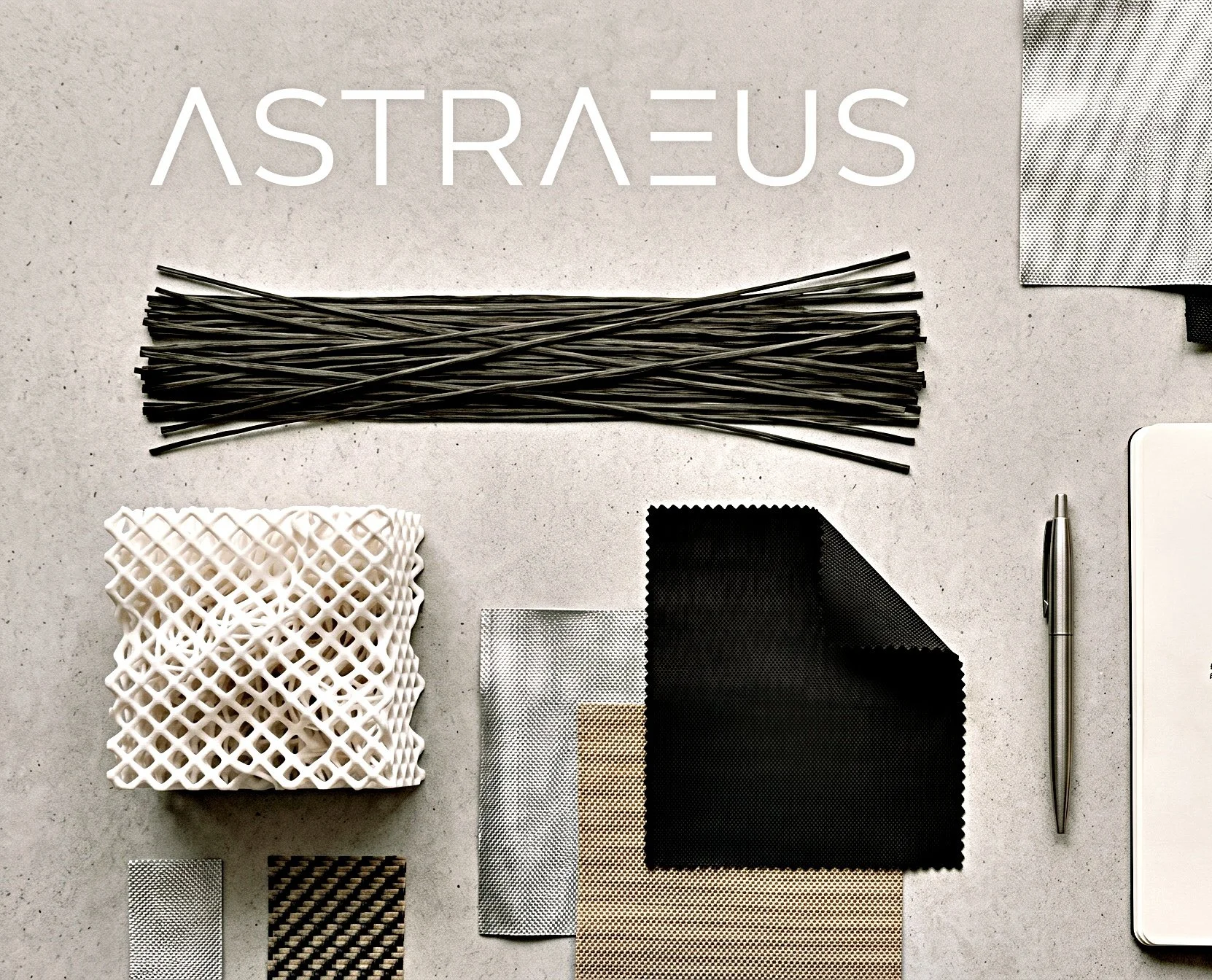
Field Note 013: Basalt Fiber as a Transitional Material System for Earth-Analog Space Habitat Research
There is growing interest within aerospace architecture and planetary infrastructure research surrounding materials that are simultaneously abundant, structurally resilient, thermally stable, and manufacturable under constrained conditions.
Among the most compelling candidates is basalt fiber: a continuous fiber material derived directly from volcanic basalt rock through melt extrusion processes. While commonly used in civil infrastructure and industrial composites on Earth, basalt fiber remains comparatively underexplored within the architectural imagination of space habitation systems.
Field Note 012: On Community, Ergonomics, and the Architecture of Belonging in Space
Extreme environments do not reward excess. They reward attunement.
Long before contemporary architecture developed tools for thermal modeling, systems optimization, or performance simulation, Indigenous cultures established ways of building that sustained life under conditions of scarcity, heat, and isolation.
Field Note 011: Learning to Live Within Limits: Indigenous Desert Architecture as Endurance Intelligence
Extreme environments do not reward excess. They reward attunement.
Long before contemporary architecture developed tools for thermal modeling, systems optimization, or performance simulation, Indigenous cultures established ways of building that sustained life under conditions of scarcity, heat, and isolation.
Field Note 010: Calibration, Not Optimization
Many contemporary work environments are designed around optimization.
Processes are streamlined. Friction is removed. Variability is treated as inefficiency. Systems are tuned to perform exceptionally well under assumed conditions.
This approach produces impressive short-term results.
It also assumes that conditions remain stable.
In long-horizon, high-stakes environments, they do not.
Field Note 009: Visibility vs. Surveillance in High-Stakes Environments
Visibility is often treated as an unqualified good.
More sightlines. More transparency. More monitoring.
In high-stakes environments, visibility is frequently equated with control and safety. Surveillance is introduced as a neutral tool—objective, protective, and necessary.
Yet increased visibility does not always produce better outcomes.
At a certain threshold, it produces strain.

Field Note 008: Redundancy, Rest, and Spatial Resilience
In technical systems, redundancy is treated as a non-negotiable safeguard.
Multiple backups. Parallel paths. Fail-safes layered against uncertainty.
In spatial systems, redundancy is often treated as inefficiency.
Extra space is removed. Alternate paths are collapsed. Places for rest are minimized or displaced. The environment is optimized for continuous use rather than sustained reliability.
This imbalance reveals a quiet assumption: that humans do not require redundancy.
Field Note 007: Designing for Error, Not Perfection
High-stakes environments are often designed around an idealized condition: perfect execution.
Processes assume clarity, attention, and compliance. Spatial systems reinforce this assumption by prioritizing efficiency, control, and uninterrupted flow.
And yet, error is not an exception in complex systems.
It is inevitable.
When environments are designed as though mistakes should not occur, the cost of inevitable error increases.
Field Note 006: Thresholds as Cognitive Reset Mechanisms
In many high-performance environments, transitions are compressed or eliminated entirely.
Movement between tasks, zones, and cognitive states is expected to occur instantly. Individuals pass from intense focus to coordination, from analysis to execution, without pause or reorientation.
The environment offers no signal that a shift has occurred.
Over time, this produces cognitive residue—attention carried from one task into the next without resolution.
Field Note 005: Silence, Acoustics, and Cognitive Load
In many high-stakes work environments, sound is treated as a byproduct rather than a system.
Machinery, alarms, HVAC, voices, and movement accumulate into a continuous acoustic field that rarely fluctuates. Over time, this field becomes normalized.
What is less visible is its cognitive cost.
Sustained noise does not merely distract. It taxes attention, increases fatigue, and erodes decision quality—often without conscious awareness.
Field Note 004: Throughput vs. Endurance: Competing Spatial Logics
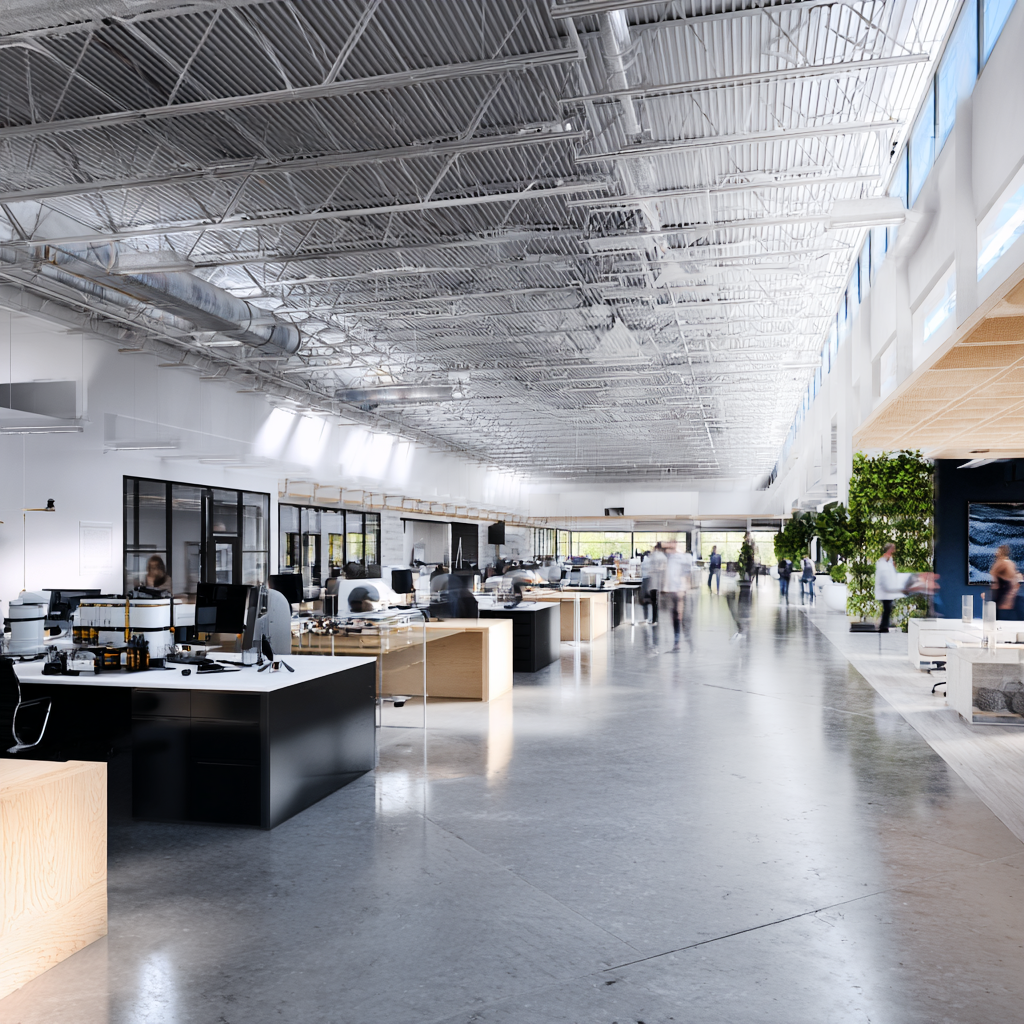
Many high-stakes environments are designed around a single dominant metric: throughput.
Speed of production. Speed of movement. Speed of decision.
These environments perform exceptionally well in the short term. Outputs increase. Timelines compress. Systems appear efficient.
Over time, however, a different pattern emerges.
Performance degrades. Error rates rise subtly. Fatigue becomes ambient. The system continues to operate—but at increasing human cost.
Field Note 003: Circulation, Encounter, and Decision Quality
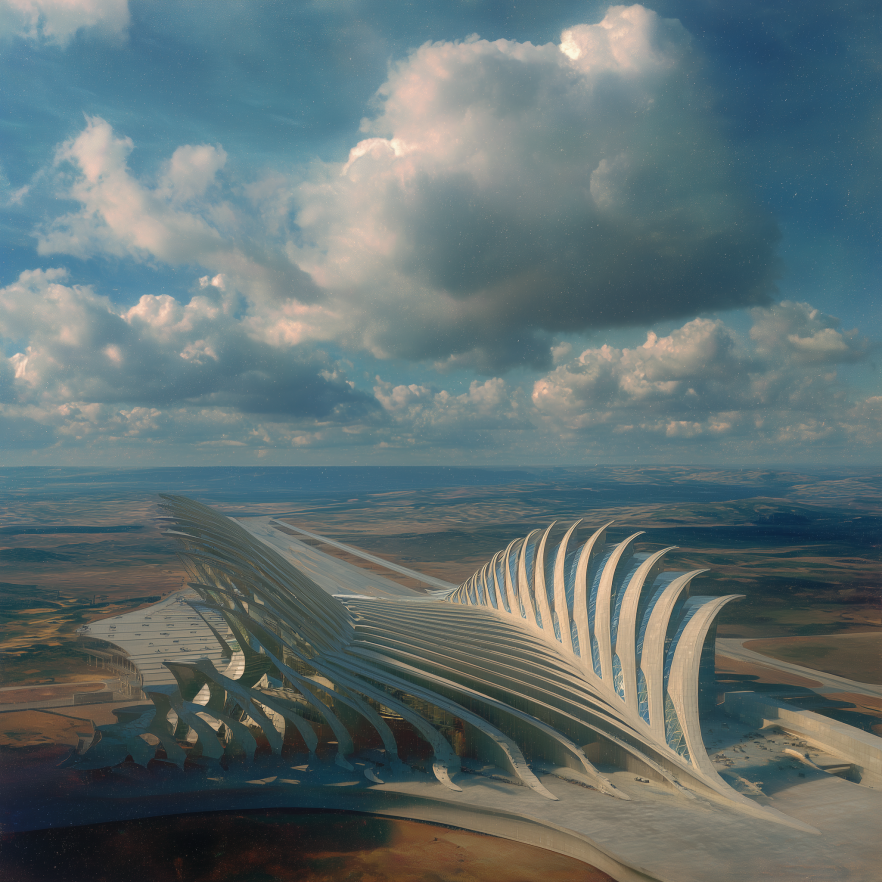
In complex work environments, circulation is rarely treated as a cognitive system.
Paths are designed to move people efficiently from point to point, minimizing distance and time. Encounter is treated as incidental. Pause is treated as obstruction.
And yet, some of the most consequential decisions occur not at desks or consoles, but in moments of movement—between tasks, across thresholds, during brief, unplanned encounters.
Circulation does not merely connect spaces.
It shapes attention.
Field Note 002: Ritual as Invisible Infrastructure
In high-stakes environments, ritual is often dismissed as non-essential—something personal, informal, or external to real work.
And yet, across complex systems, the most stable operations quietly rely on repeated, shared behaviors that structure time, attention, and transition.
These behaviors are rarely labeled as ritual.

Field Note 001: On Endurance, Environment, and the Quiet Failure of Systems
In environments built to support complex, long‑horizon work, failure rarely arrives as a single dramatic event.
More often, it arrives quietly.